Gyeongju South Korea is one of the most historically rich cities in Asia, a place where ancient royal tombs, Buddhist temples, and thousand-year-old pagodas sit alongside everyday modern life. Often called “the museum without walls,” Gyeongju served as the capital of the Silla Kingdom for nearly a thousand years. Today, it preserves one of the richest collections of historical treasures in East Asia.
So, this guide covers the best things to do in Gyeongju, along with tips on how to get there and when to visit Gyeongju.
Unlike many historic cities where ancient landmarks are confined to a small district, Gyeongju’s heritage stretches across the entire city. Royal burial mounds rise from grassy parks, stone pagodas stand beside modern roads, and traditional hanok homes continue to reflect centuries of Korean culture. Furthermore, beautiful seasonal scenery, vibrant flower gardens, and mountain landscapes give visitors a rare opportunity to experience Korea’s history in a living setting.
Quick Facts About Gyeongju South Korea
| Fact | Details |
|---|---|
| Country | South Korea |
| Province | North Gyeongsang Province |
| Known For | Silla Kingdom Heritage, Bulguksa Temple, Royal Tombs, Cheomseongdae Observatory |
| UNESCO Status | Gyeongju Historic Areas (UNESCO World Heritage Site) |
| Founded | 57 BC |
| Best Time to Visit | Spring and Autumn |
| Time Needed | 2–3 Days |
| Continent | Asia |
Where Is Gyeongju South Korea?
Gyeongju South Korea sits in the southeastern region of the country within North Gyeongsang Province. The city lies between the coastal communities of Pohang and Ulsan, surrounded by mountains, fertile plains, and scenic countryside that have shaped its development for centuries.
Despite its ancient roots, Gyeongju is easily accessible via South Korea’s modern transportation network. Furthermore, high-speed rail links connect the city to Seoul and Busan, making it one of the country’s most rewarding cultural destinations for travelers seeking history, architecture, and traditional Korean heritage.
Why Visit Gyeongju South Korea?
Gyeongju South Korea offers visitors a chance to step into the country’s ancient past while enjoying beautiful natural scenery and well-preserved cultural landmarks. The city contains royal tombs, historic temples, observatories, traditional villages, and archaeological sites that collectively tell the story of the Silla Kingdom. Together, these sites create one of the most complete historical experiences in Asia.
Moreover, unlike many heritage destinations, Gyeongju’s historic sites spread throughout the city rather than confining themselves to a single district. Visitors can spend days exploring UNESCO-listed monuments, photographing seasonal flower displays, wandering through hanok neighborhoods, and discovering some of Korea’s most significant cultural treasures.
For more incredible Asian travel destinations, explore our full destinations guide.
The Thousand-Year Legacy of Korea’s Golden Kingdom
Few cities in Asia possess a historical legacy as remarkable as Gyeongju South Korea. Founded in 57 BC, the city became the capital of the Silla Kingdom, one of Korea’s Three Kingdoms and eventually the dynasty responsible for unifying much of the Korean Peninsula. For nearly a thousand years, Gyeongju served as the political, cultural, and spiritual center of Silla civilization.
At its height, Gyeongju ranked among the largest cities in East Asia. Royal palaces, temples, observatories, and aristocratic residences filled the landscape, and as a result, the city grew into one of Asia’s most prosperous centers. Scholars, artisans, monks, and traders contributed to the city’s prosperity. Consequently, the wealth accumulated during this period helped create many of the monuments that survive today.
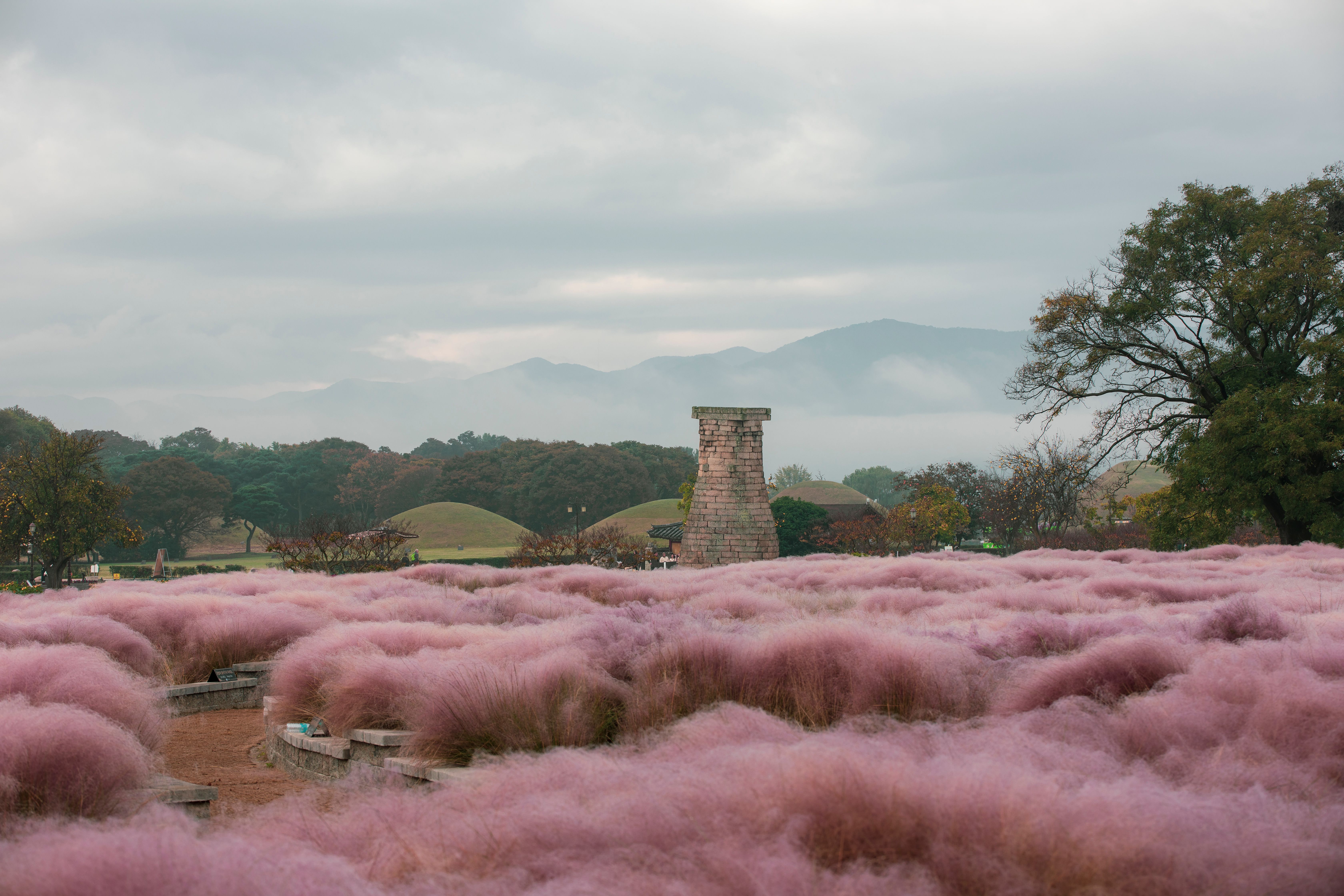
One of the most significant surviving structures is Cheomseongdae Observatory. Constructed during the reign of Queen Seondeok in the 7th century, it is widely regarded as one of the oldest surviving astronomical observatories in the world. Additionally, the structure demonstrates the scientific sophistication achieved during the Silla era.
Buddhism also flourished throughout the kingdom, leading to the construction of architectural masterpieces such as Bulguksa Temple and nearby Seokguram Grotto. These monuments represent some of the finest examples of Korean Buddhist art and architecture. Furthermore, they continue to draw visitors from around the world.
Today, Gyeongju Historic Areas form a UNESCO World Heritage Site encompassing palaces, temples, fortresses, tombs, and archaeological remains. The city continues to reveal new discoveries while preserving one of the most complete collections of ancient Korean heritage in the country.
The Silla Kingdom and Korean Unification
The Silla Kingdom’s greatest achievement was not simply building monuments but unifying much of the Korean Peninsula in the 7th century. This unification, achieved through military alliances and diplomatic strategy, ended centuries of conflict between the Three Kingdoms. Consequently, Gyeongju became the undisputed cultural and political capital of a unified Korean state, a status that brought extraordinary wealth and artistic achievement to the city.
Artisans, Monks, and the Golden Age of Silla
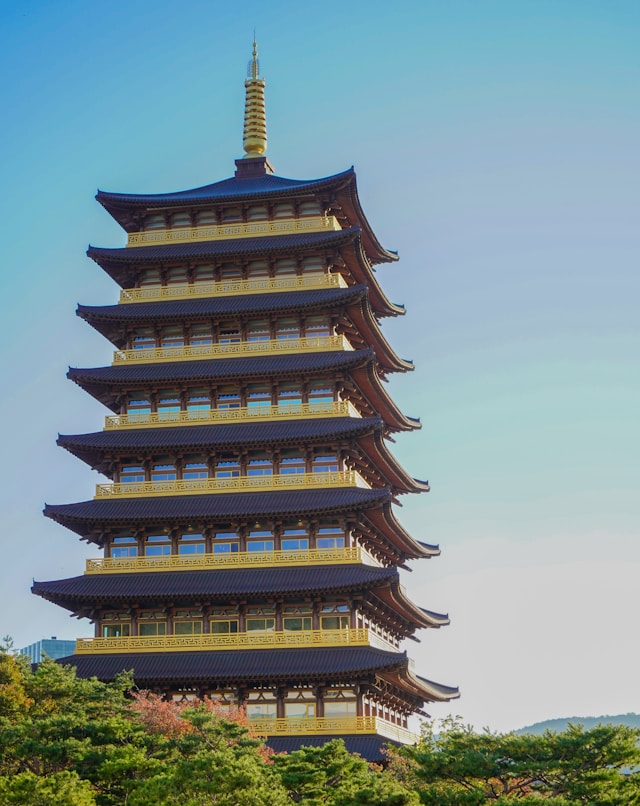
At the height of the Silla period, Gyeongju attracted some of the most talented artisans, architects, and Buddhist monks in East Asia. Their collective work produced temples, pagodas, observatories, and gold artifacts of remarkable sophistication. Furthermore, the influence of Tang Dynasty China blended with native Korean traditions to create a distinctive Silla artistic style that remains visible in the city’s surviving monuments today.
Donggung Palace and Wolji Pond
Among Gyeongju’s most iconic attractions, this royal palace and pond complex offers visitors a glimpse into the luxury and sophistication of Silla royal life. Originally part of a royal palace complex used by the crown prince, the site offers visitors a glimpse into the luxury and sophistication of Silla royal life.
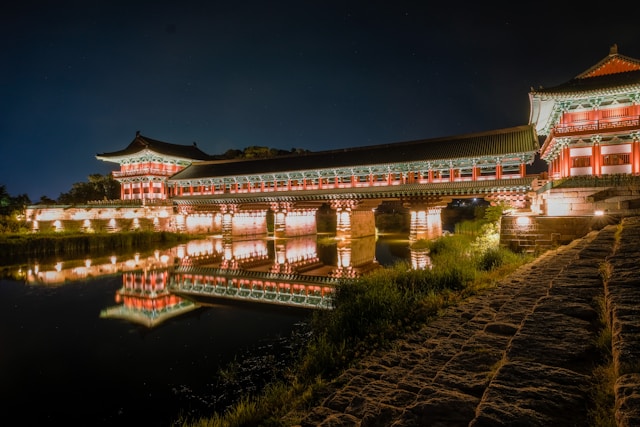
The restored pavilions overlooking the pond create a stunning setting throughout the day. However, the site becomes especially magical after sunset. Illuminated buildings reflect across the water, creating one of South Korea’s most photographed night scenes. As a result, many visitors time their arrival for the early evening hours.
The peaceful atmosphere, elegant architecture, and historical significance make Donggung Palace and Wolji Pond essential stops for any visitor exploring Gyeongju South Korea.
Evening at Wolji Pond
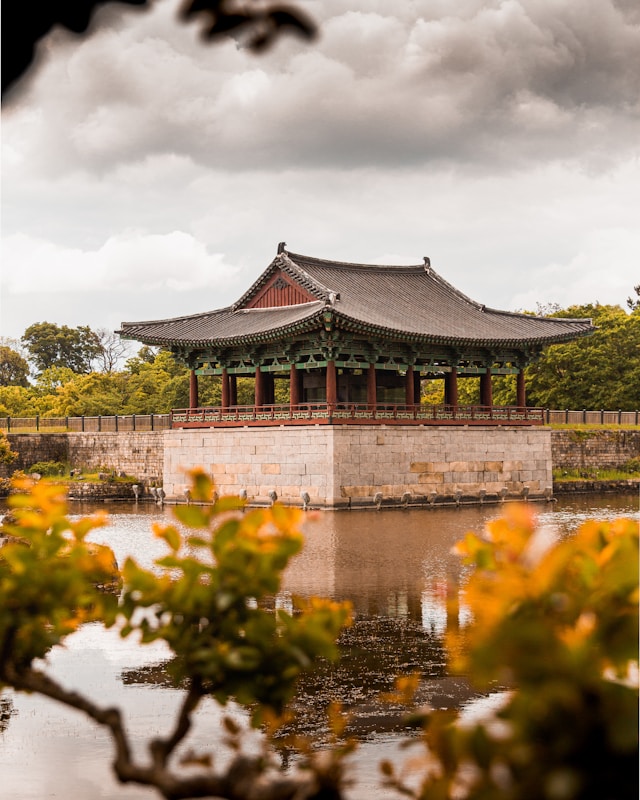
Visiting Donggung Palace and Wolji Pond after dark is one of the most memorable experiences in Gyeongju South Korea. As night falls, the illuminated pavilions cast shimmering reflections across the water, creating a scene that photographers consistently describe as one of the most beautiful in the country. Moreover, the evening atmosphere is noticeably quieter than the daytime crowds, giving visitors space to appreciate the elegance of the architecture without distraction.
History of the Royal Palace Complex
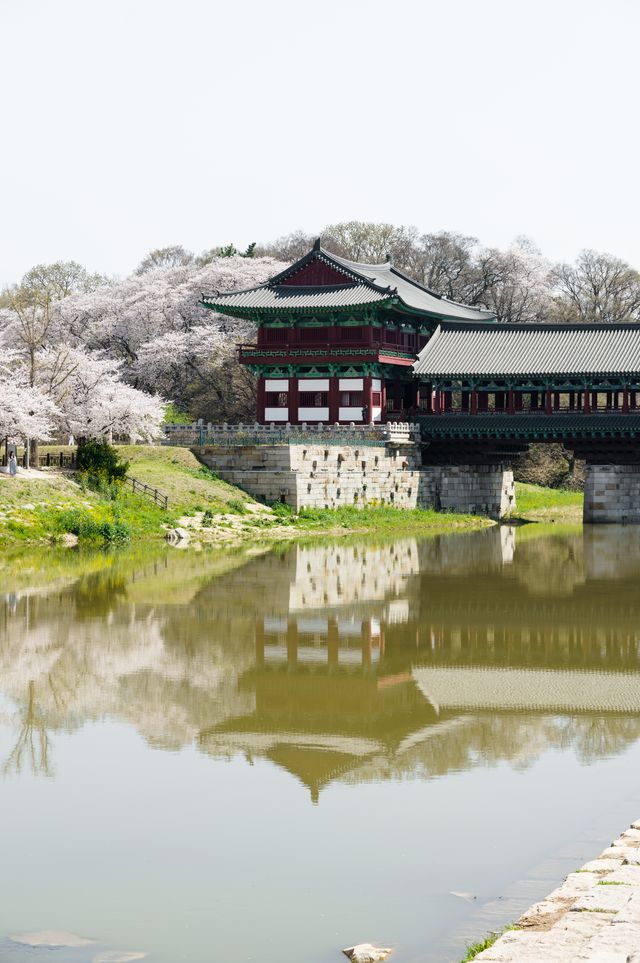
Donggung Palace originally served as a secondary palace for the Silla crown prince and hosted royal banquets and state events. Furthermore, the site underwent extensive restoration based on archaeological findings, and artifacts uncovered during excavations now display in the nearby Gyeongju National Museum. As a result, a visit to Wolji Pond pairs naturally with a trip to the museum for a fuller understanding of Silla royal life.
Bulguksa Temple and the Spiritual Heart of Silla
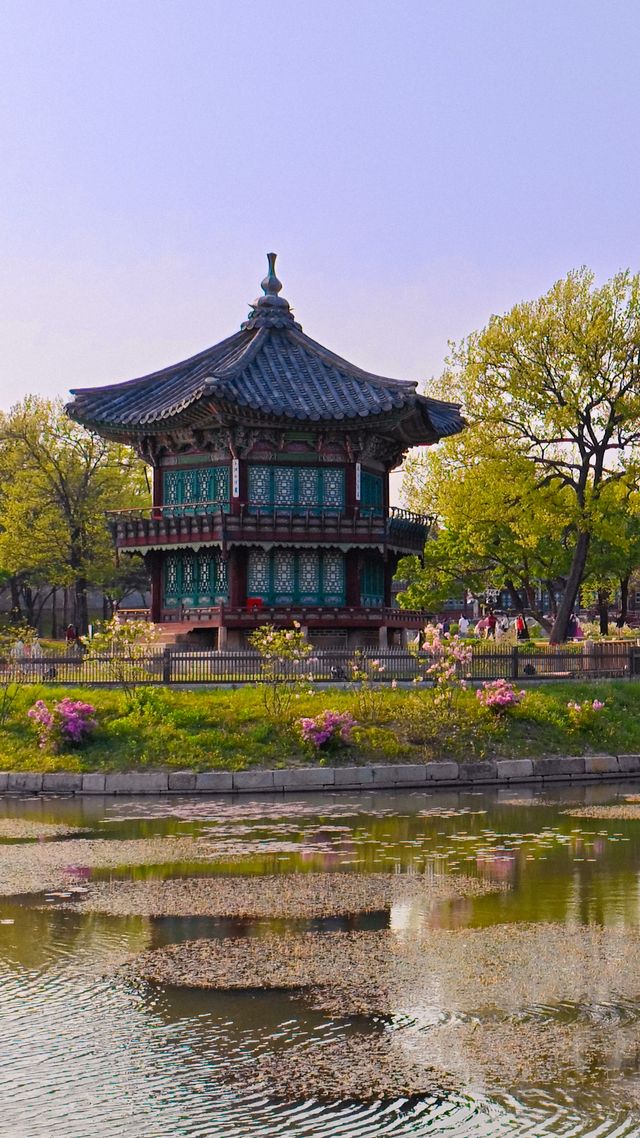
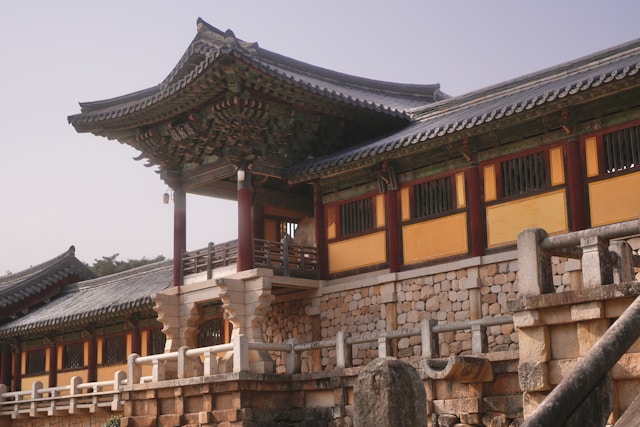
Bulguksa Temple is one of South Korea’s most celebrated cultural treasures and a masterpiece of Buddhist architecture. Originally established during the Silla period, builders designed the temple to symbolize the Buddhist vision of paradise on Earth.
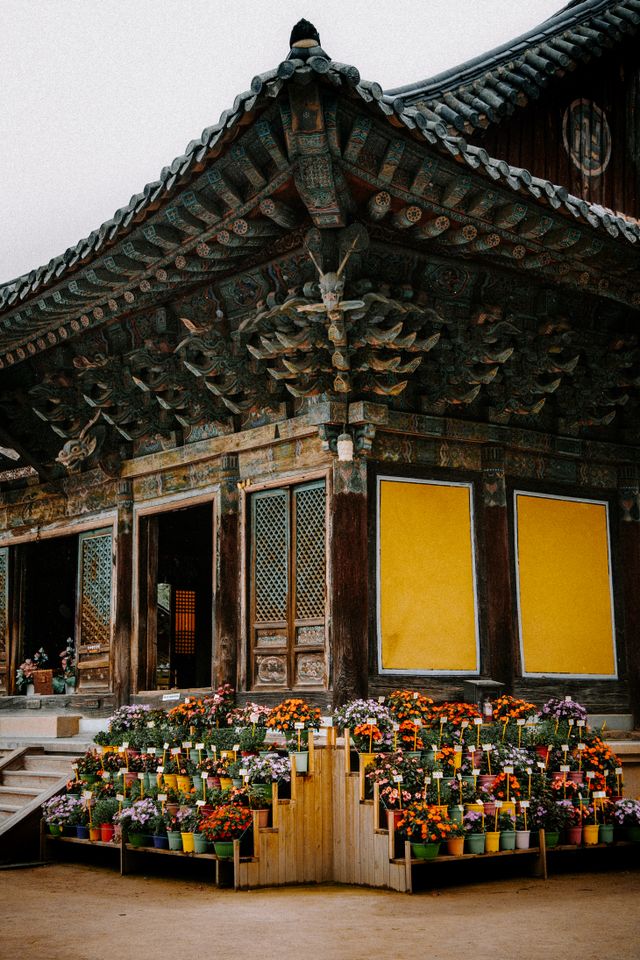
Notably, visitors encounter ornate wooden halls, carefully crafted stone terraces, historic staircases, and intricate architectural details that reflect centuries of religious devotion and artistic achievement. Moreover, the temple remains an active place of worship while serving as one of Korea’s most important historical landmarks.
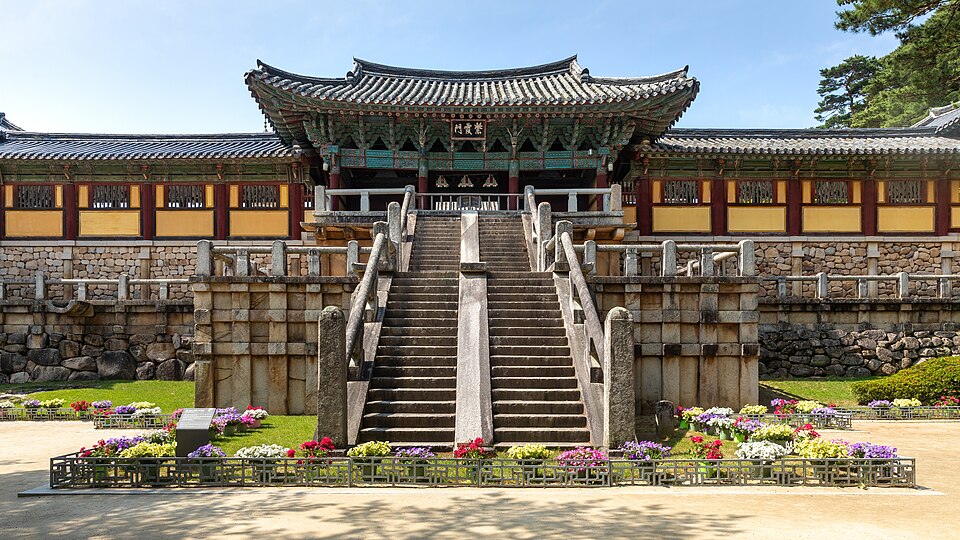
Together with Seokguram Grotto, Bulguksa represents the spiritual and cultural achievements of the Silla Kingdom. Indeed, it continues to inspire visitors from around the world.
Seokguram Grotto and the Mountain Shrine
Perched high on the slopes of Mount Toham above Bulguksa Temple, Seokguram Grotto houses one of the finest Buddhist sculptures in Asia. The central granite Buddha figure, carved in the 8th century, sits in meditative stillness within a domed stone chamber that builders designed to align with the rising sun. Consequently, the grotto represents not only a triumph of religious devotion but also a remarkable feat of astronomical and architectural precision.
Visiting Bulguksa Temple Today
Bulguksa Temple welcomes visitors throughout the year, with each season offering a different perspective on its beauty. In spring, cherry blossoms frame the stone staircases and wooden halls. In autumn, golden foliage surrounds the temple complex. Furthermore, arriving early in the morning gives visitors the best chance to experience the temple in a quieter, more contemplative atmosphere before the crowds arrive. Therefore, Bulguksa is a site that rewards multiple visits across different seasons.
Walking Among the Royal Tombs
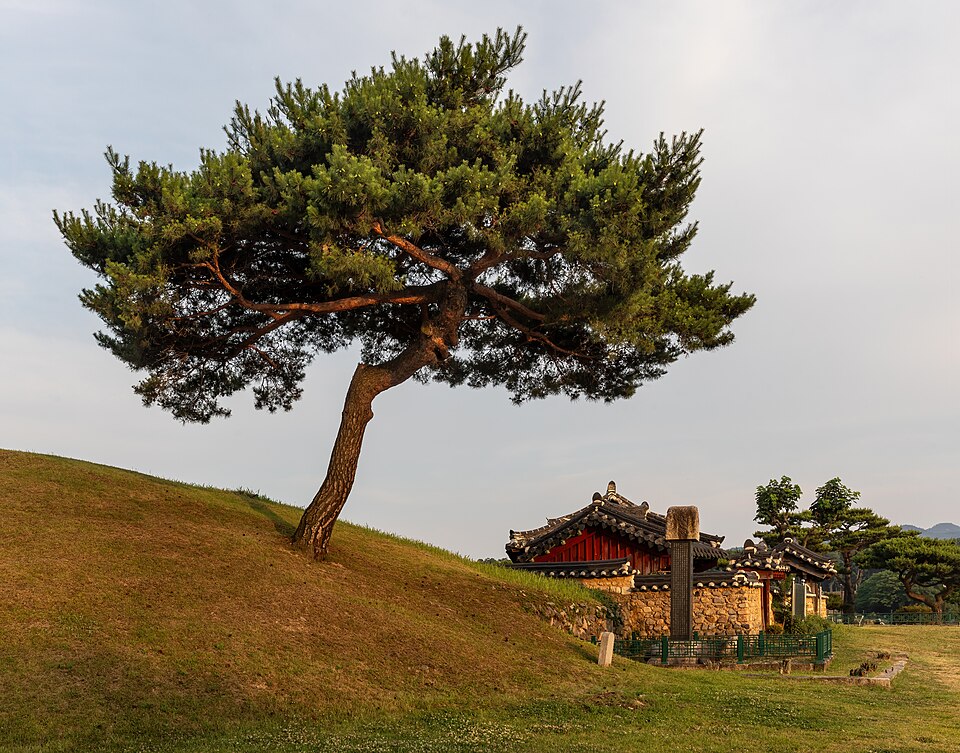
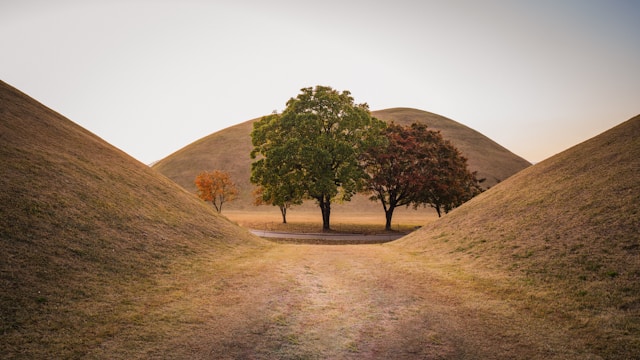
One of the most distinctive features of Gyeongju South Korea is its collection of royal burial mounds scattered throughout the city. These grassy tumuli contain the remains of Silla kings, queens, and members of the aristocracy.
Rather than traditional cemeteries, these tombs resemble rolling hills rising gently from parks and open spaces. Indeed, archaeological excavations have uncovered gold crowns, jewelry, pottery, and other treasures that reveal the sophistication of Silla society. Furthermore, the Daereungwon Tomb Complex is among the most famous examples, offering visitors an opportunity to walk among these monumental burial sites while learning about Korea’s royal past.
The Daereungwon Tomb Complex
The Daereungwon Tomb Complex is the most visited burial site in Gyeongju South Korea, containing 23 large tumuli within a single park. Visitors can walk along peaceful pathways that wind between the grassy mounds, appreciating the sheer scale of these ancient burial monuments up close. Furthermore, one tomb, Cheonmachong, is open to the public and displays replica artifacts including the famous Cheonma, or Heavenly Horse, painting discovered during excavations. Consequently, Daereungwon offers both an outdoor walking experience and a glimpse into the treasures buried within.
What the Tombs Reveal About Silla Society
The artifacts uncovered from Gyeongju’s royal tombs have transformed our understanding of Silla civilization. Gold crowns, jade ornaments, glass vessels, and intricately decorated weapons all point to a society of considerable wealth and artistic sophistication. Moreover, the presence of imported goods among the tomb offerings suggests that Silla maintained active trade connections with China, Central Asia, and beyond. As a result, the tombs function not just as burial sites but as windows into the wider world of ancient Korea.
Traditional Hanok Villages and Everyday Heritage
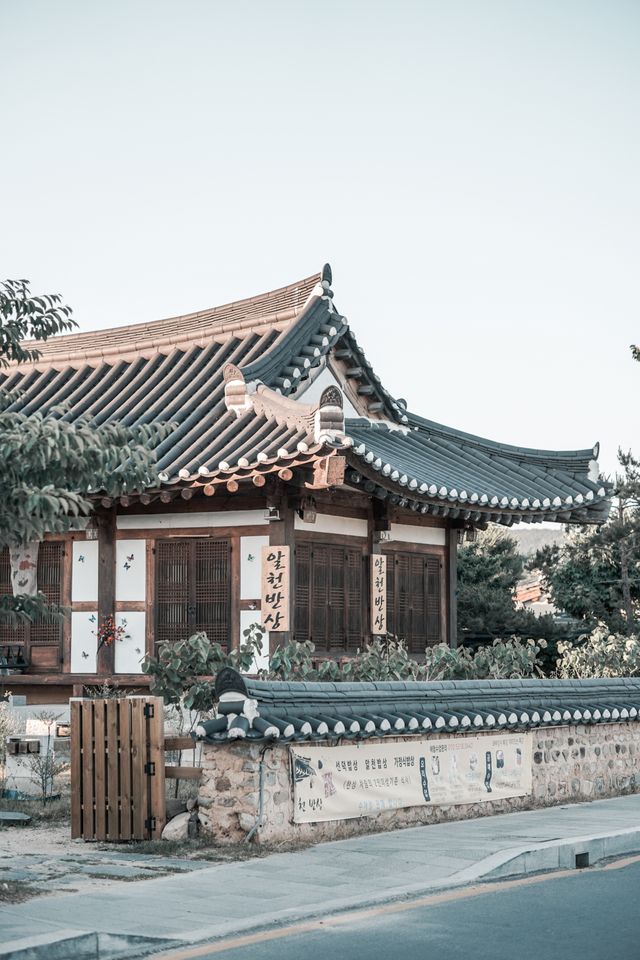
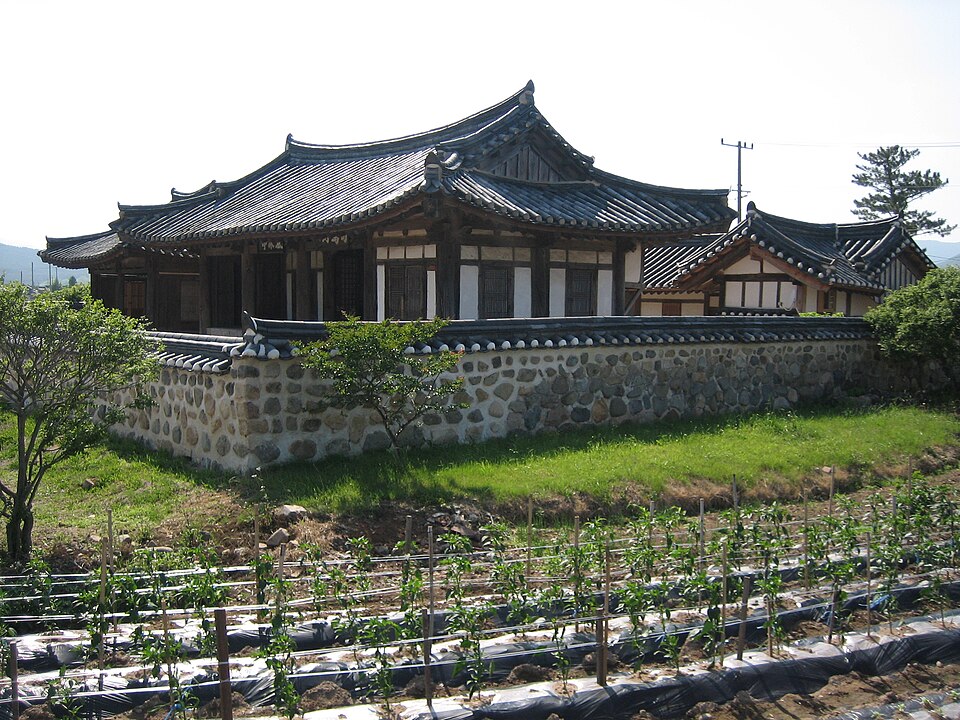
Beyond its famous monuments, Gyeongju also preserves aspects of everyday Korean life through traditional hanok villages and historic neighborhoods. These districts feature wooden homes with tiled roofs, stone walls, and courtyards that reflect architectural traditions dating back centuries.
Many of these homes remain occupied or have been adapted into guesthouses, cafés, and cultural centers. Consequently, visitors can experience traditional Korean architecture while exploring quieter areas that offer a more intimate view of local heritage. In addition, the surrounding countryside, vegetable fields, and rural landscapes further contribute to the city’s distinctive character.
Architecture of Everyday Life
Traditional hanok homes in Gyeongju South Korea offer a quieter counterpoint to the city’s grand monuments. These wooden structures, with their curved tiled roofs and enclosed courtyards, reflect a design philosophy that prioritized harmony with nature. Furthermore, many hanok neighborhoods in Gyeongju remain remarkably intact, giving visitors a genuine sense of how ordinary Koreans lived during the Silla era and beyond. Walking through these districts, therefore, feels less like visiting a museum and more like stepping into living history.
Hanok Guesthouses and Cultural Stays
For travelers who want a deeper connection with Gyeongju’s heritage, staying in a hanok guesthouse is one of the most rewarding options. Many families have converted their historic homes into small accommodations that offer traditional sleeping arrangements, home-cooked Korean breakfasts, and a peaceful atmosphere far removed from modern hotel corridors. Consequently, these stays provide an intimate experience of Korean culture that complements the city’s grand historic landmarks.
A City That Changes With the Seasons
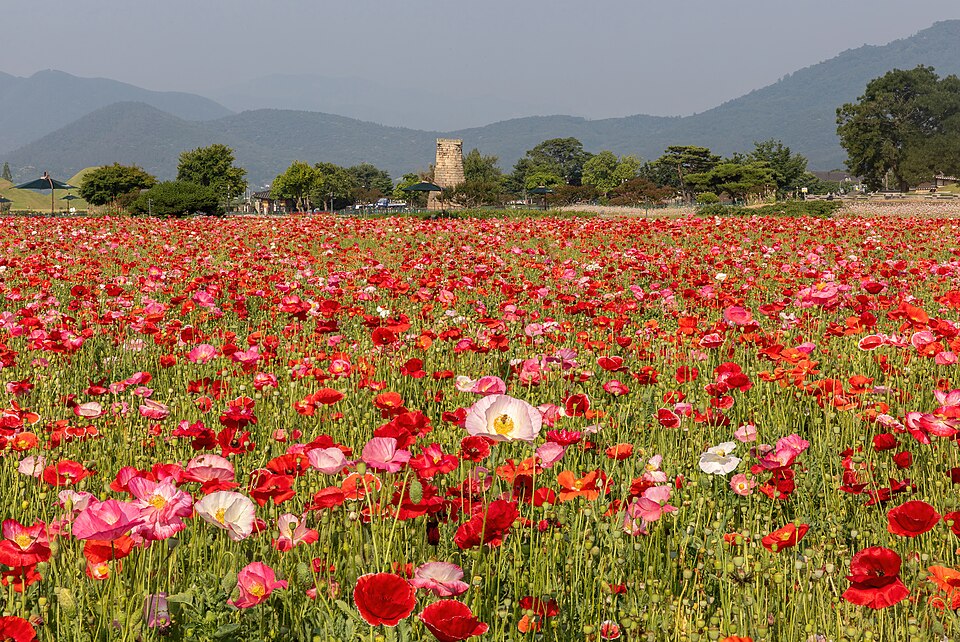
Gyeongju remains attractive throughout the year, but each season brings its own unique character. For instance, spring fills parks and gardens with colorful flowers and cherry blossoms, while summer brings lush greenery to the surrounding countryside.
Autumn transforms the region with brilliant shades of gold, orange, and red, creating spectacular scenery around temples, tombs, and mountain landscapes. Winter, on the other hand, offers a quieter atmosphere, often dusting historic monuments with snow.
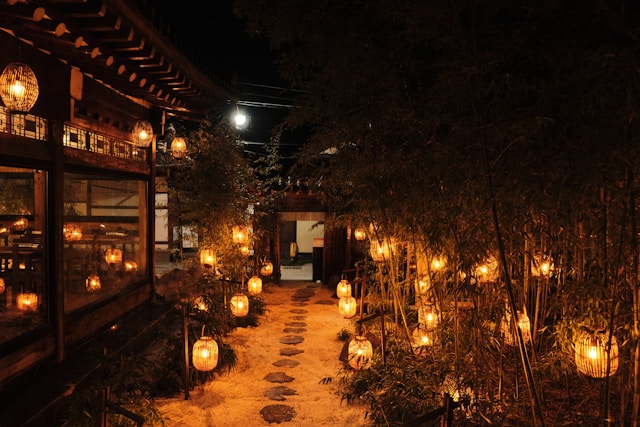
Seasonal flower displays around Cheomseongdae Observatory have become especially popular among photographers. They attract visitors eager to capture the contrast between ancient history and natural beauty. Moreover, lantern displays bring additional warmth and color to Gyeongju’s historic atmosphere throughout the year.
One Historical Fact About Gyeongju
Cheomseongdae Observatory, constructed during the 7th century under Queen Seondeok, is widely considered one of the oldest surviving astronomical observatories in the world. Furthermore, it remains one of South Korea’s most important scientific and cultural landmarks, and consequently draws researchers and visitors from around the world.
How to Get to Gyeongju
- Take the KTX high-speed train from Seoul to Singyeongju Station (approximately 2 hours).
- Gyeongju is about 30 minutes from Busan by KTX.
- Intercity buses connect Gyeongju with major cities throughout South Korea.
- Local buses and taxis provide convenient access to historic sites.
Many visitors combine Gyeongju with Busan as part of a broader South Korea itinerary.
Best Time to Visit Gyeongju South Korea
Spring and autumn are the best times to visit Gyeongju South Korea. In spring, cherry blossoms and colorful flowers transform the city’s parks and historic sites. In autumn, golden and red foliage creates spectacular scenery around temples and tombs. Furthermore, both seasons offer comfortable temperatures ideal for outdoor exploration. Summer brings lush greenery but can be hot and humid. Winter, meanwhile, is quieter and occasionally brings snow to the historic monuments.
Is Gyeongju South Korea Worth Visiting?
Absolutely. Gyeongju South Korea offers one of the most complete historical experiences in the country. Specifically, its combination of UNESCO World Heritage Sites, royal tombs, Buddhist temples, traditional architecture, and beautiful seasonal scenery makes it a destination unlike any other. Whether you are interested in history, culture, architecture, or photography, Gyeongju delivers an unforgettable experience.
Final Thoughts on Gyeongju South Korea
Gyeongju South Korea offers an unparalleled journey through the country’s ancient past. From royal tombs and Buddhist temples to observatories and traditional villages, the city preserves an extraordinary collection of cultural treasures. As a result, these treasures continue to shape Korean identity today. Whether you are exploring UNESCO World Heritage Sites, admiring seasonal landscapes, or learning about the Silla Kingdom, Gyeongju rewards visitors with a deeper appreciation for Korea’s remarkable history and enduring cultural heritage.
If you enjoy ancient historic cities, you may also love Jiufen Taiwan, another atmospheric destination where history and culture blend beautifully.
Image Credits
- Flower Fields Near Cheomseongdae Observatory — Basile Morin, CC BY-SA 4.0, via Wikimedia Commons
- Donggung Palace and Wolji Pond at Night — Photo by insung yoon on Unsplash
- Pavilion Reflections at Wolji Pond — Photo by Domenico Gentile on Unsplash
- Lantern Path in Gyeongju — Photo by Austin Curtis on Unsplash
- Historic Pavilion Reflected in Water — Photo by 정규송 Nui MALAMA from Pexels
- Traditional Pavilion Beside a Pond — Photo by Uriel Pacheco from Pexels
- Traditional Hanok House — Photo by Naufal Shidqi from Pexels
- Royal Tumulus and Pine Tree — Basile Morin, CC BY-SA 4.0, via Wikimedia Commons
- Woljeonggyo Pavilion Architecture — Basile Morin, CC BY-SA 4.0, via Wikimedia Commons
- Bulguksa Temple Main Hall and Stairway — Basile Morin, CC BY-SA 4.0, via Wikimedia Commons
- Hanok Home and Vegetable Fields — Alain Seguin at Flickr from Ottawa, Canada, CC BY-SA 3.0, via Wikimedia Commons
- Korean Pagoda Landmark — Photo by Lee SH on Unsplash
- Bulguksa Temple Architectural Details — Photo by Laszlo Oveges on Unsplash
- Royal Tomb Landscape of Gyeongju — Photo by john ko on Unsplash
- Bulguksa Temple Wooden Hall Detail — Photo by Muneeb Babar from Pexels
- Cheomseongdae Observatory and Pink Muhly Grass — Photo by 정규송 Nui MALAMA from Pexels


Sources: UNESCO World Heritage Centre; Korea Tourism Organization; Gyeongju City Government; UNESCO – Seokguram Grotto and Bulguksa Temple.