Cuenca Ecuador sits high in the southern Andes. In fact, whitewashed colonial buildings and blue tiled cathedral domes line its entire grid of cobblestone streets. Still, this is not a manufactured tourist set piece. Instead, it is a working city, and flower vendors still gather in the same plazas their grandparents used. Now, a modern tram also shares the road with taxis and tour buses. Meanwhile, wrought iron balconies and rivers lined with willow trees give the historic center its unmistakable character. Naturally, the compact old town rewards slow walking more than any checklist, especially for travelers researching things to do in Cuenca Ecuador. Overall, this guide covers what makes the trip up into the mountains worthwhile.
Quick Facts About Cuenca, Ecuador
| Country | Ecuador |
| Region | Azuay Province, Southern Highlands of Ecuador |
| Known For | Blue and white cathedral domes, colonial architecture, cobblestone streets, and flower markets |
| UNESCO Status | UNESCO World Heritage Site (Historic Centre), inscribed 1999 |
| Founded | April 12, 1557, on the ruins of the Inca city of Tomebamba |
| Best Time to Visit | June through December (dry season) |
| Time Needed | One to two full days |
| Continent | South America |
Where is Cuenca, Ecuador?
Cuenca sits in the southern sierra of Ecuador, in Azuay Province. Specifically, it lies roughly 470 kilometers (290 miles) south of the capital, Quito. Guayaquil is closer still, about 200 kilometers (125 miles) to the northwest. As a result, most visitors reach the city by a short domestic flight rather than a long overland trip.
Notably, the historic center sits at an elevation of about 2,560 meters (8,400 feet). As a result, this keeps daytime temperatures mild throughout the year. Four rivers cross the city, and the Tomebamba is the most visible. Specifically, it runs along the southern edge of the old town. In fact, Cuenca takes its Spanish name from this confluence of rivers, since a cuenca is a river basin.
Why Visit Cuenca, Ecuador?
Generally, Cuenca Ecuador is worth visiting for travelers who want colonial architecture without the crowds of better known cities. Unlike Quito, this old town rarely feels overrun with tourists, even in its busiest plazas. Cobblestone streets and covered arcades give the historic center a lived in charm rather than a museum feel. Meanwhile, the city’s location in the Andes keeps the climate mild all year. As a result, walking tours stay comfortable in almost any season.
In addition to the architecture, Cuenca offers an easy introduction to Ecuadorian daily life. Flower markets, artisan stalls, and a modern tram all share space with centuries old churches. For this reason, a visit here pairs well with time in Quito, Guayaquil, or nearby Cajas National Park. Either way, Cuenca rewards visitors who take their time, whether they are drawn by the old town or the surrounding Andean scenery.
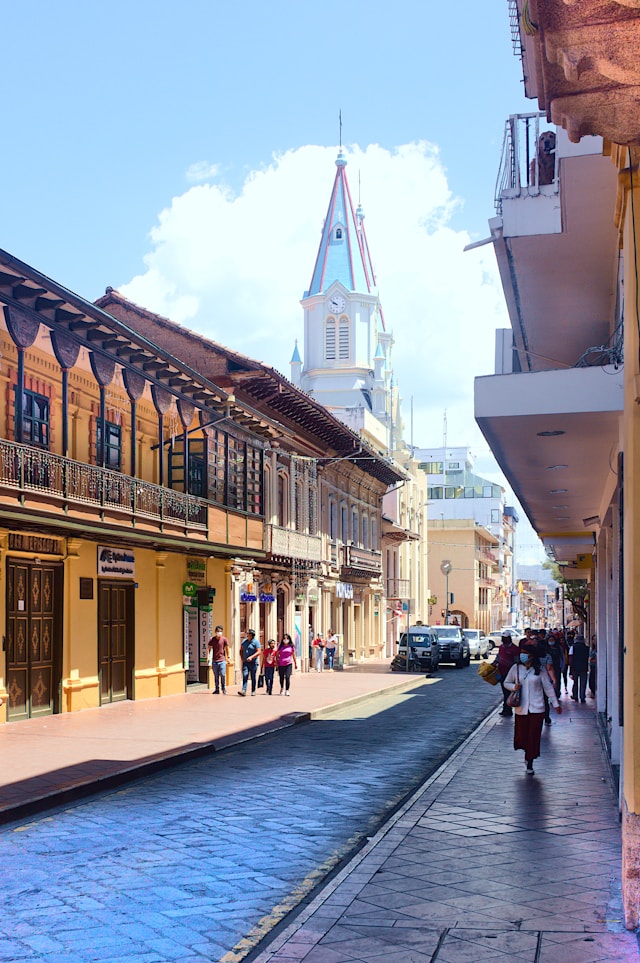
The New Cathedral of the Immaculate Conception
No landmark defines Cuenca Ecuador more than the New Cathedral. Specifically, its official name is the Catedral Metropolitana de la Inmaculada Concepción. Construction began in 1885 and continued for nearly a century, finally finishing in 1975. Blue and white tiles cover its domes, and the design blends Romanesque Revival with Neo Gothic details. Notably, the cathedral’s silhouette rises above the surrounding rooftops even from several blocks away.
Blue and White Domes Above the Skyline
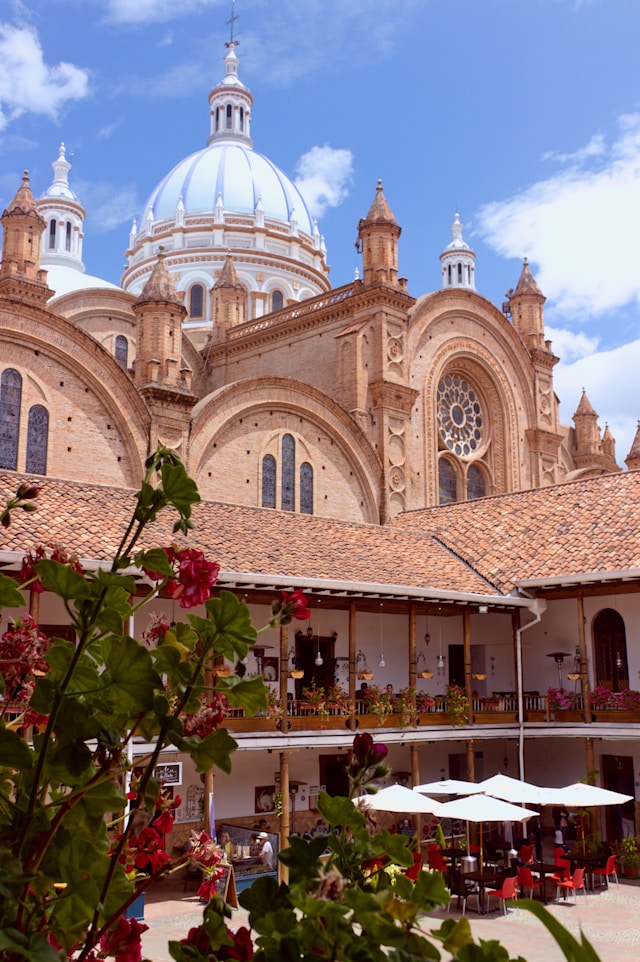
The cathedral’s most recognizable feature is its trio of blue and white striped domes. They are visible from courtyards, rooftop cafes, and gardens across the old town. In particular, a flower filled courtyard restaurant sits just below one of the best vantage points. There, red geraniums frame the brick towers and tiled cupolas.
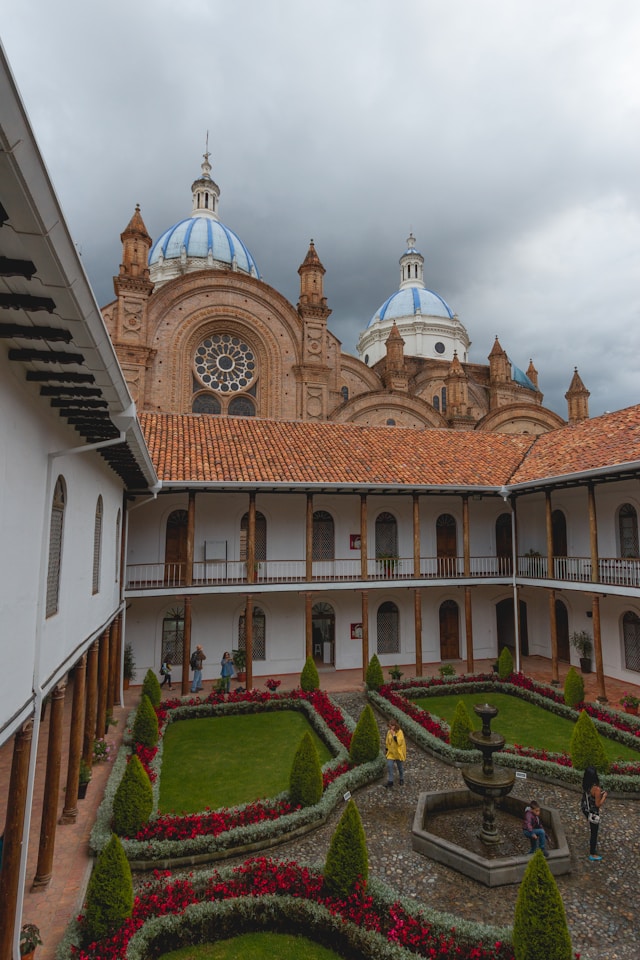
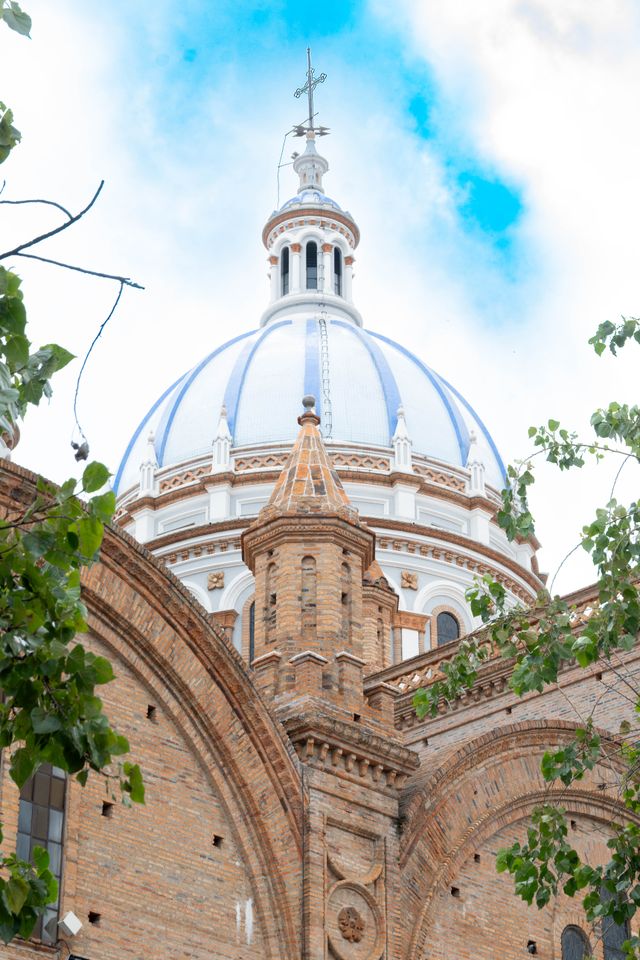
Similarly, a manicured garden courtyard elsewhere in the old town offers a quieter angle. Clipped hedges and a stone fountain frame the domes from below. In fact, even a single tree lined street corner can offer a surprising close up view. In this case, branches partially obscure the dome, which only adds to the scene’s charm.
A Facade of Alabaster and Marble
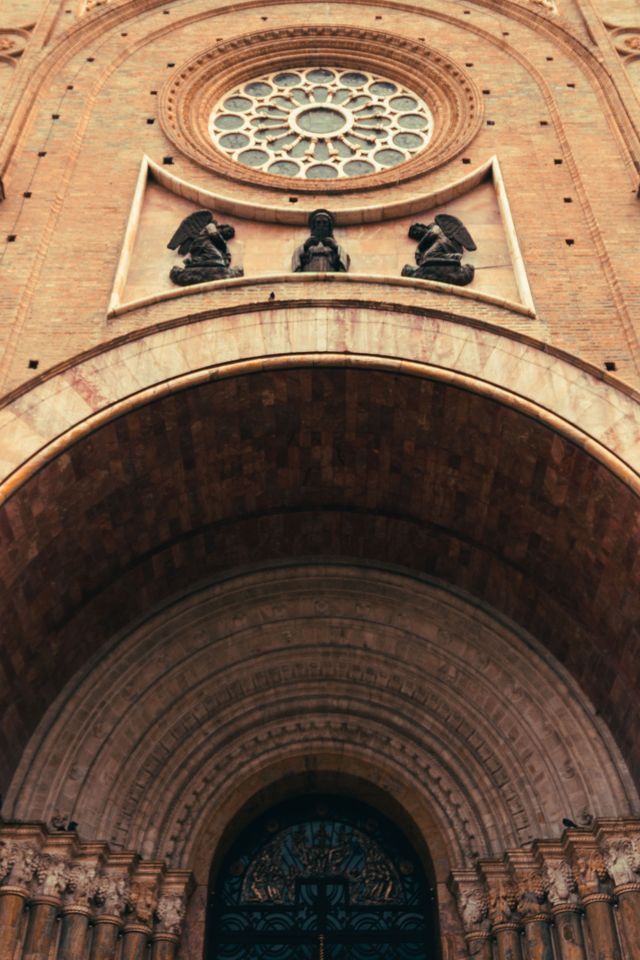
The cathedral’s facade is built from alabaster and local marble. A large rose window sits above the main archway, while three carved figures rest just beneath it and watch over anyone who passes through the doors below.
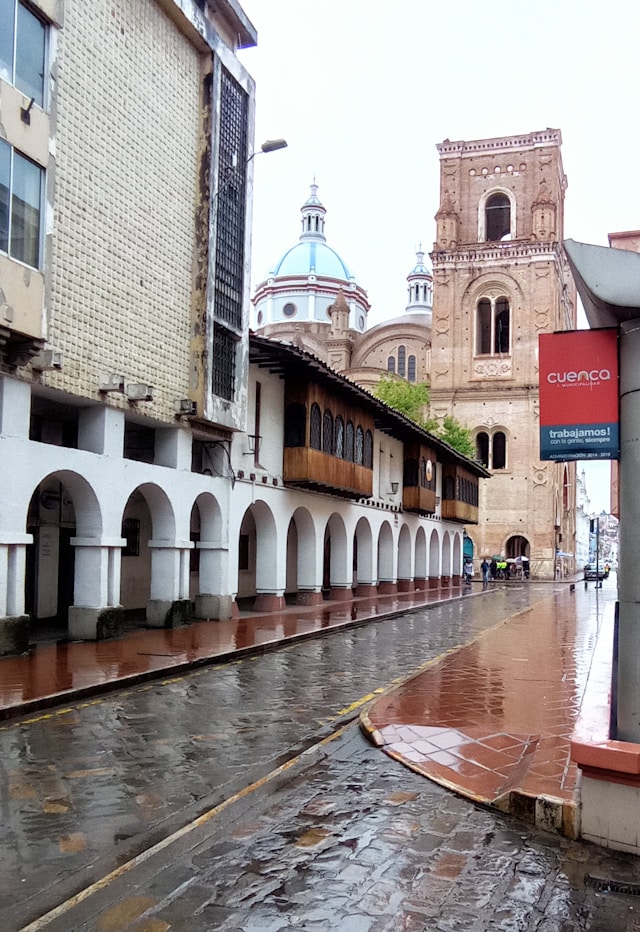
Likewise, a short walk away, a rain slicked arcade leads toward the same brick tower. Then, its reflection stretches across wet cobblestones after a passing shower. This view is especially striking during the rainy season, when the historic center empties out and the streets take on a quiet glow.
Inside the Nave
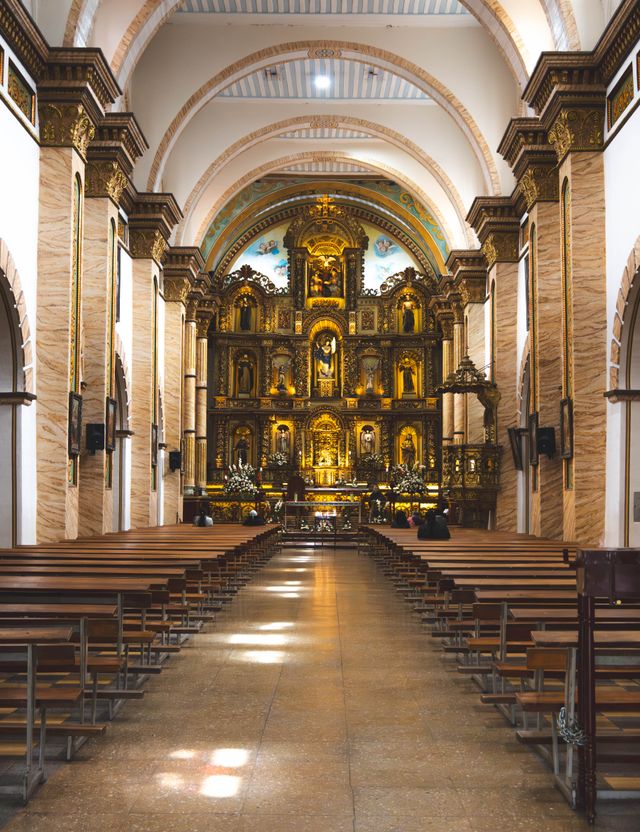
Step inside, and the scale of the New Cathedral becomes even more apparent. At its 1975 inauguration, the building could hold nine thousand of Cuenca’s ten thousand residents. Pink marble from Carrara, Italy covers the floor of the nave. Meanwhile, a gilded altar rises at the far end, beneath rows of wooden pews. Even on a quiet afternoon, sunlight filtering through the stained glass gives the interior a warm feel.
Cuenca’s Colonial Streets and Architecture
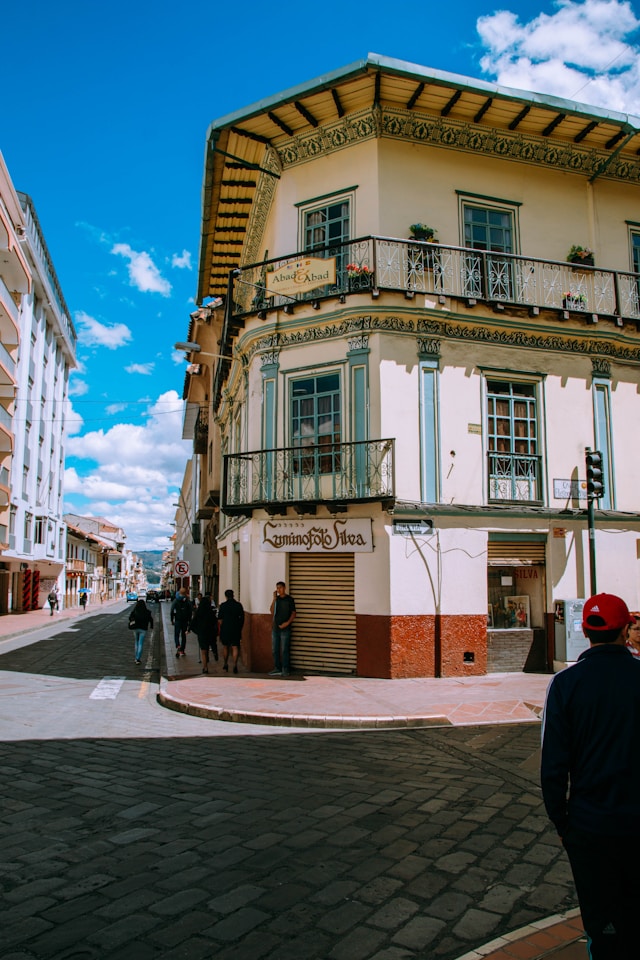
Indeed, Cuenca’s real charm beyond the cathedral lies in its street level architecture. Corner buildings with wrought iron balconies line nearly every block, and no two facades look alike. For example, a cream colored building on Calle Presidente Córdova houses a decades old photo studio.
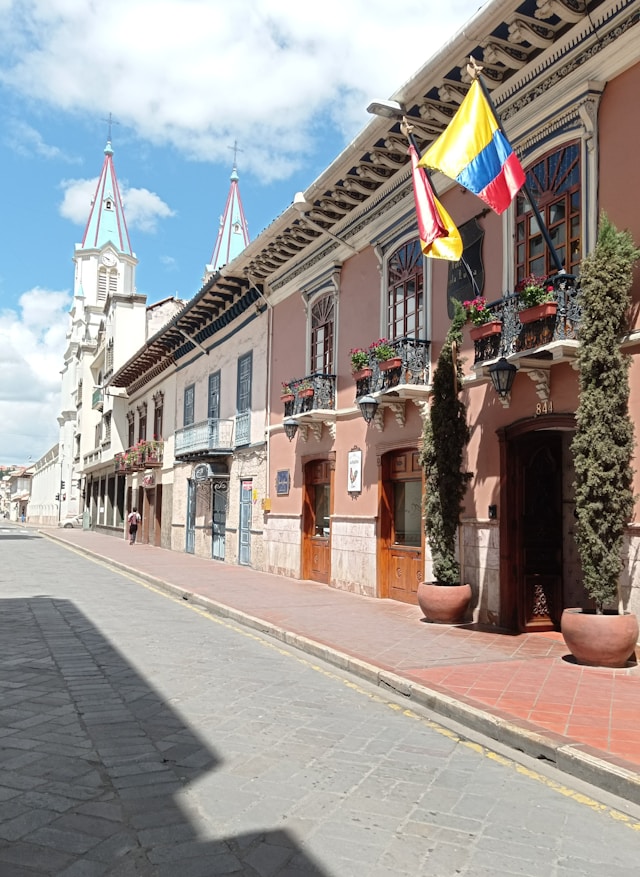
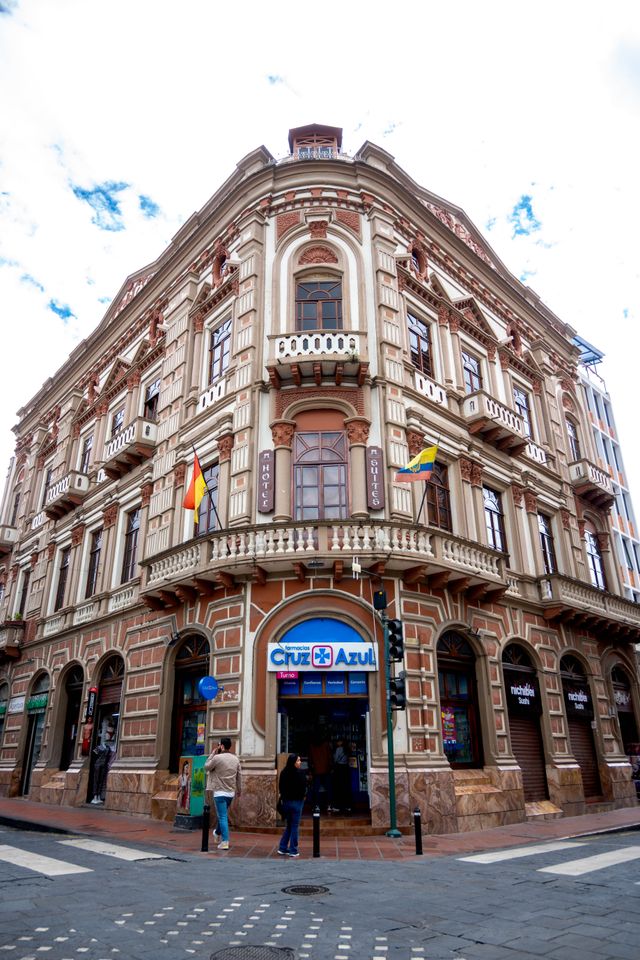
Some buildings stand out for their color rather than their ironwork. For instance, a rose colored facade near the historic core flies the Spanish and Ecuadorian flags, a nod to the city’s founding by settlers from Cuenca, Spain. Likewise, an ornately carved corner building nearby houses a pharmacy, its balconies recalling the city’s trading wealth.
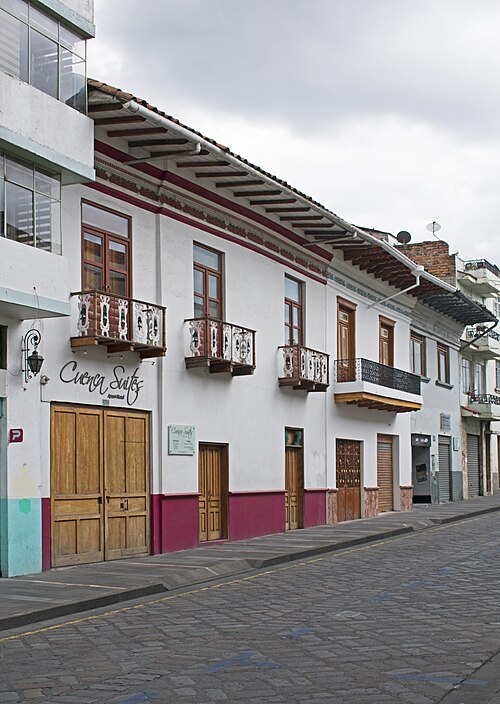
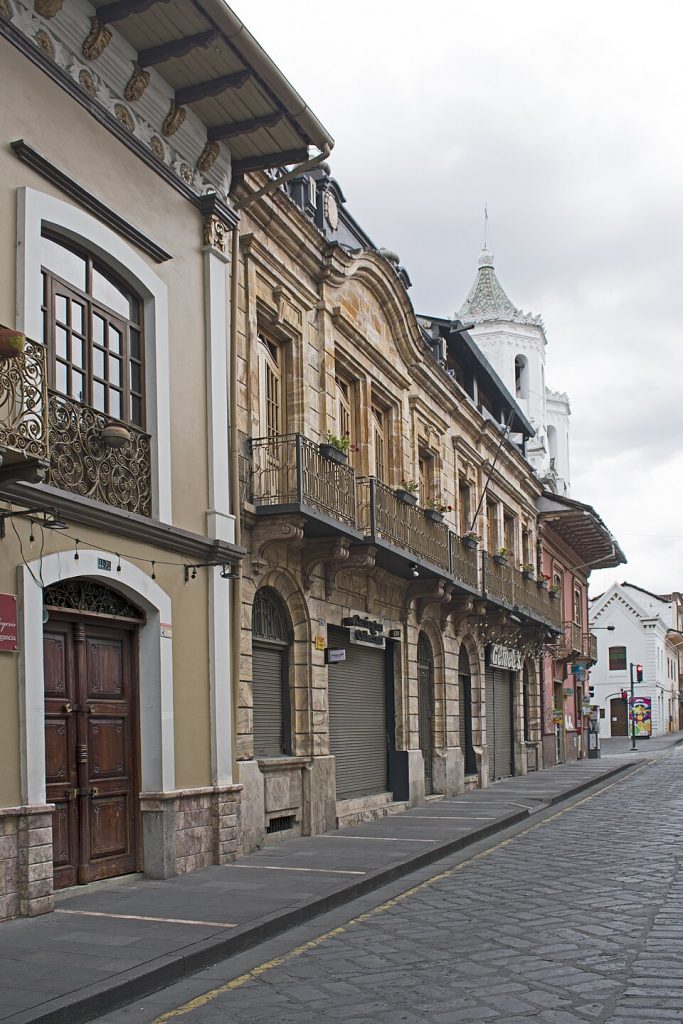
Notably, Calle Simón Bolívar, one of the historic center’s main thoroughfares, is worth walking end to end. White colonial buildings with patterned wooden balconies line its length, occasionally broken by a boutique hotel or shuttered storefront. Namely, at one intersection, ironwork balconies frame a distant view of a church tower.
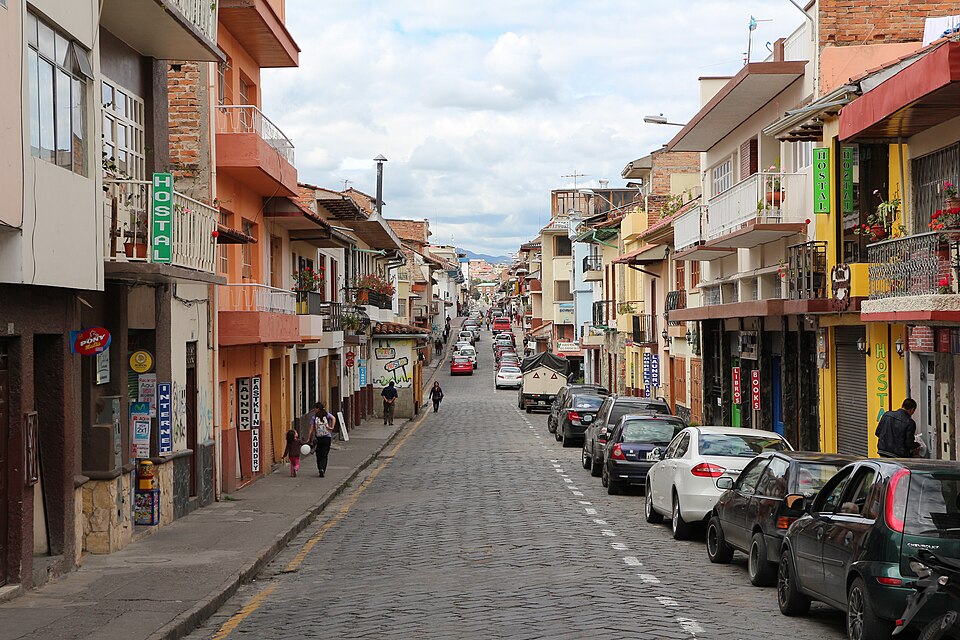
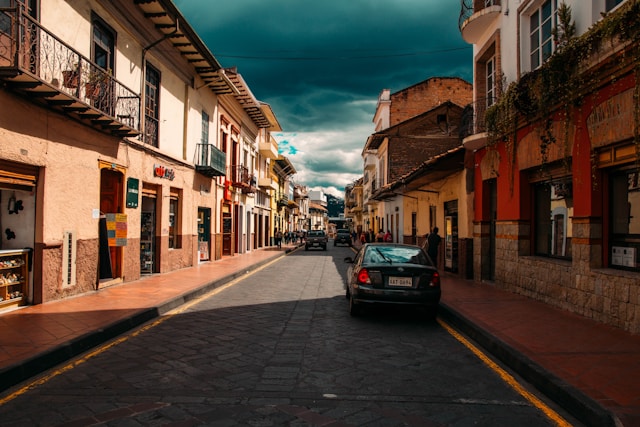
Not every street in Cuenca is quite so polished, and that is part of the appeal. A few blocks from the main plazas, hostels, laundry shops, and parked cars fill a quieter residential stretch. Nearby, the evening sky can turn a dramatic shade of teal just before sunset. These less manicured corners are, in their own way, just as much a part of Cuenca Ecuador as the cathedral itself.
Markets, Rivers, and the Tranvía: Everyday Life in Cuenca
Cuenca’s plazas and riverbanks reveal a side of the city that has little to do with its architecture. Markets, rivers, and a modern tram line all shape daily life here. Each one is worth building into a visit.
The Flower Market at Plaza de las Flores
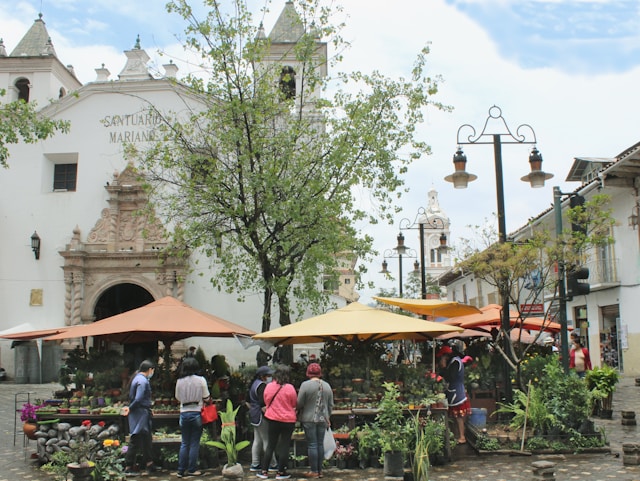
Just outside the Monastery of El Carmen de la Asunción, vendors have sold flowers in the same small plaza since the church’s founding in 1682. Stalls packed with potted plants and cut flowers crowd the square each morning. This trade has made Cuenca a historic flower exporting hub. Shoppers browse in the shadow of the Santuario Mariano, whose bell towers rise just behind the market stalls.
Handicrafts and Woven Goods
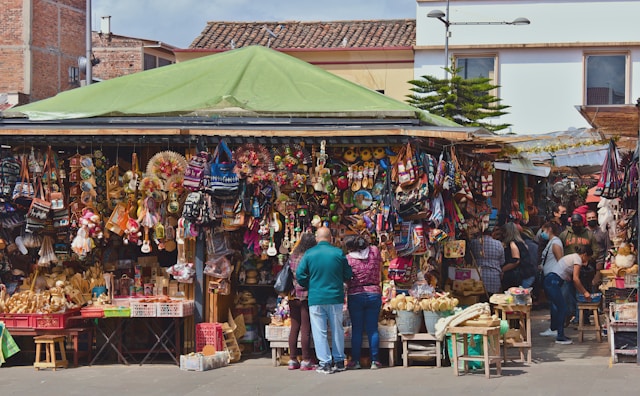
A short walk from the flower market, artisan stalls sell woven bags, wooden crafts, and souvenir keepsakes. Shoppers move steadily between the stands. Panama hats, despite the name, are made in workshops around Cuenca, and several stalls sell them alongside more everyday handicrafts.
Baskets Strung Above the Street
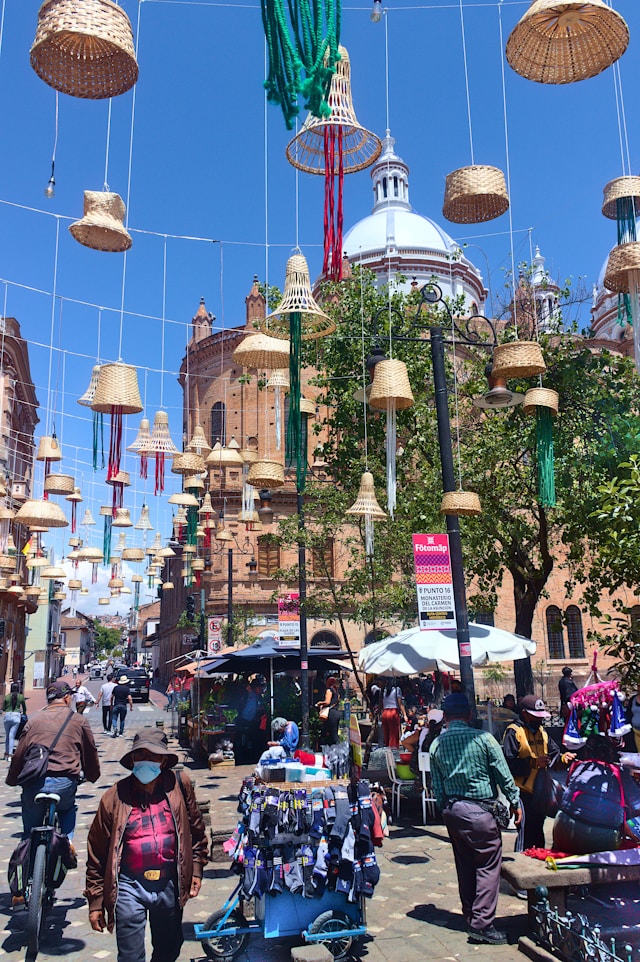
Overhead, some pedestrian streets are strung with woven basket lampshades and colorful tassels. This decorative touch changes with local festivals. Looking up between the hanging baskets, the cathedral’s brick facade and dome are still visible through nearby trees.
The Tomebamba River and the City Tram
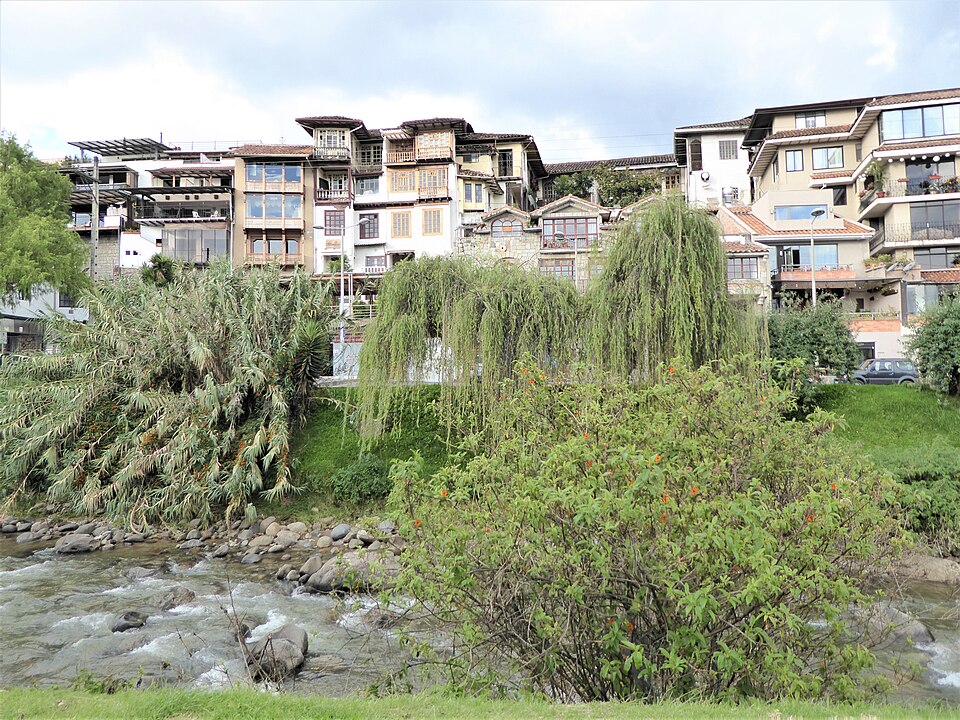
South of the historic center, the Tomebamba River runs beneath a row of colonial houses built directly into the riverbank. Willow trees shade their wooden balconies and stone facades. This area, known locally as El Barranco, offers one of the best places to see how Cuenca has grown along its four rivers.
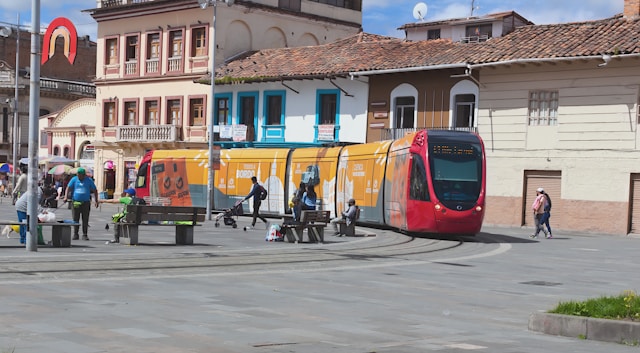
Since 2020, a red and yellow tram line has run through the historic center. It connects the northern Industrial Park to the southern edge of the city near Baños. The tram shares the road with pedestrians and cyclists in several plazas. Riding a full loop is an easy way to see the old town from a different angle.
One Historical Fact About Cuenca, Ecuador
When construction began on the New Cathedral in 1885, its architect designed towers tall enough to rival the great cathedrals of Europe. However, a calculation error meant the foundation could not support the full weight of the planned towers. As a result, the towers were built shorter than intended. This compromise still shapes the cathedral’s skyline today. Despite the mistake, the finished building, completed in 1975, remains one of the most photographed landmarks in Ecuador.
How to Get To Cuenca, Ecuador
Most travelers reach Cuenca by air, flying into Mariscal Lamar International Airport from either Quito or Guayaquil. Avianca Ecuador and LATAM Ecuador both operate short domestic flights to the city. The airport sits just a few minutes from the historic center by taxi. For travelers already in Ecuador, this is generally the fastest option.
Overland travel is also possible, though it takes considerably longer. Buses from Guayaquil take around four hours, along a scenic route through Cajas National Park. The trip from Quito takes closer to ten hours on the Pan American Highway. Cuenca’s Terminal Terrestre, the main bus station, sits a short walk from the airport. Once in the city, taxis, buses, and the Tranvía cover most transportation needs, though the historic center is easiest to explore on foot.
Best Time to Visit Cuenca, Ecuador
Cuenca’s mountain climate stays mild all year, with average daily temperatures near 16 degrees Celsius (61 degrees Fahrenheit). Even so, the city has a clear dry season and rainy season. The dry season runs roughly from June through December. Generally, it offers the most comfortable conditions for walking the historic center. The rainy season runs from January through May, with sunny mornings followed by afternoon showers. The heaviest rain typically falls in March, April, and May.
Because the climate rarely swings to extremes, Cuenca works as a year round destination. That said, visitors planning long days on foot should aim for the dry season whenever their schedule allows.
Is Cuenca, Ecuador Worth Visiting?
Cuenca Ecuador is well worth visiting for travelers interested in colonial architecture and mild mountain weather. It also suits anyone who wants a slower pace than Ecuador’s larger cities. The historic center’s UNESCO listing reflects a level of preservation that is hard to find elsewhere in the country. At the same time, Cuenca is not without its rough edges. Some streets outside the main tourist areas show real wear.
Even so, for anyone asking whether Cuenca Ecuador is worth visiting, the answer generally comes down to what a traveler wants. Those seeking beaches or nightlife should look elsewhere in Ecuador. However, travelers who enjoy walking historic streets and visiting markets will likely find a day or two in Cuenca well spent.
Final Thoughts
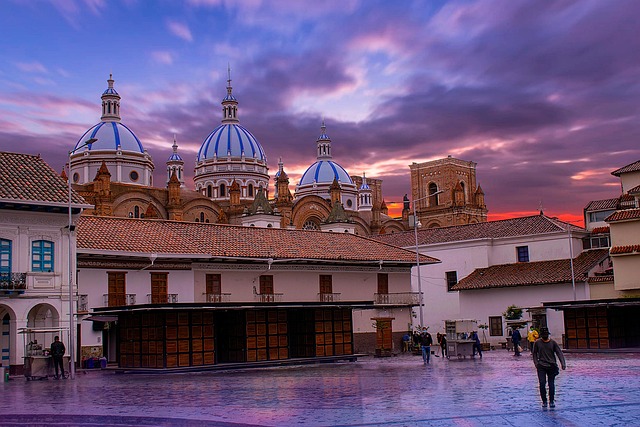
Cuenca Ecuador rewards visitors who slow down and wander rather than rush between landmarks. The cathedral’s blue domes anchor the skyline. Even so, the real character of the city shows up in its flower markets, riverside neighborhoods, and quiet residential streets. At sunset, the domes turn a deep shade of pink against the mountain sky. Even then, the historic center still feels like a place built for walking rather than sightseeing.
If you are building a broader Ecuador or South America itinerary, colonial architecture is not unique to the Andes. Consider pairing a visit to Cuenca with a stop in Valparaiso, Chile, another colorful, walkable city with a strong colonial and maritime history.
Image Credits
Introduction / Featured Image
- A Colonial Street Near the Gobernación del Azuay – Photo by Juan Ordonez on Unsplash
Why Visit Cuenca, Ecuador
- A Quiet Colonial Street Beneath the Clock Tower – Photo by Jonathan Monck-Mason on Unsplash
The New Cathedral of the Immaculate Conception
- The New Cathedral’s Domes Above a Flower Courtyard – Photo by Jonathan Monck-Mason on Unsplash
- A Courtyard Garden Framed by the Cathedral Domes – Photo by Cristian Castillo on Unsplash
- The Cathedral Dome Framed by Nearby Trees – Photo by David Mosquera on Pexels
- The Cathedral’s Carved Stone Entrance – Photo by adephoenix on Pexels
- A Rain Slicked Arcade Leading to the Cathedral Tower – Photo by Jonathan Monck-Mason on Unsplash
- The Gilded Altar Inside the Cathedral Nave – Photo by David Mosquera on Pexels
Cuenca’s Colonial Streets and Architecture
- A Colonial Corner Building in Cuenca’s Historic Center – Photo by Juan Ordonez on Unsplash
- A Colonial Facade Flying the Spanish and Ecuadorian Flags – Photo by Jonathan Monck-Mason on Unsplash
- An Ornate Corner Building in Downtown Cuenca – Photo by David Mosquera on Pexels
- Balconied Buildings Along Calle Simón Bolívar – Photo by Ymblanter, Wikimedia Commons, CC BY-SA 4.0
- A Street Corner View Toward a Distant Church Tower – Photo by Ymblanter, Wikimedia Commons, CC BY-SA 4.0
- A Colonial Street Lined With Hostels – Photo by Bernard Gagnon, Wikimedia Commons, CC BY-SA 3.0
- A Cobblestone Street Beneath a Dramatic Evening Sky – Photo by Juan Ordonez on Unsplash


Markets, Rivers, and the Tranvía: Everyday Life in Cuenca
- Shoppers Browse the Flower Market Outside Santuario Mariano – Photo by Jonathan Monck-Mason on Unsplash
- A Souvenir Stall Packed With Handicrafts – Photo by Jonathan Monck-Mason on Unsplash
- Woven Basket Decorations Strung Above a Plaza – Photo by Jonathan Monck-Mason on Unsplash
- Colonial Houses Along the Tomebamba River – Photo by Arabsalam, Wikimedia Commons, CC BY-SA 4.0
- The Tranvía Streetcar Crossing a Historic Plaza – Photo by Jonathan Monck-Mason on Unsplash

Final Thoughts
- The Cathedral Domes at Sunset – Photo by ASchuehlein on Pixabay