
Cidade Velha Cape Verde is the oldest European colonial town in the tropics and the birthplace of Cape Verdean culture. Today, however, it is a sleepy fishing village of stone houses, ruined churches and a mighty clifftop fort. Yet its quiet streets hold a powerful and often painful history that shaped the Atlantic world.
Quick Facts About Cidade Velha, Cape Verde
| Country | Cape Verde (Cabo Verde) |
| Region | South coast of Santiago Island |
| Known For | Pelourinho, Fort Real de São Filipe, cathedral ruins, Rua Banana |
| UNESCO Status | UNESCO World Heritage Site (2009): Cidade Velha, Historic Centre of Ribeira Grande |
| Founded | 1462, by Portuguese settlers, as Ribeira Grande |
| Best Time to Visit | November to June |
| Time Needed | Half a day to 1 day |
| Continent | Africa |
Where Is Cidade Velha, Cape Verde?
Cidade Velha lies on the south coast of Santiago, the largest island of Cape Verde. More precisely, it sits at the mouth of the Ribeira Grande valley, where a green ravine meets the Atlantic Ocean.
Meanwhile, the capital, Praia, is only about 10 kilometres to the east. As a result, the town is an easy half day or full day trip from the city.
Why Visit Cidade Velha, Cape Verde?
First, Cidade Velha is a place of great historical importance. In 2009, UNESCO listed it as a World Heritage Site under the name Cidade Velha, Historic Centre of Ribeira Grande.
Second, the town helps visitors understand the story of the Atlantic slave trade. Its monuments are also a moving reminder of the millions of lives affected by it.
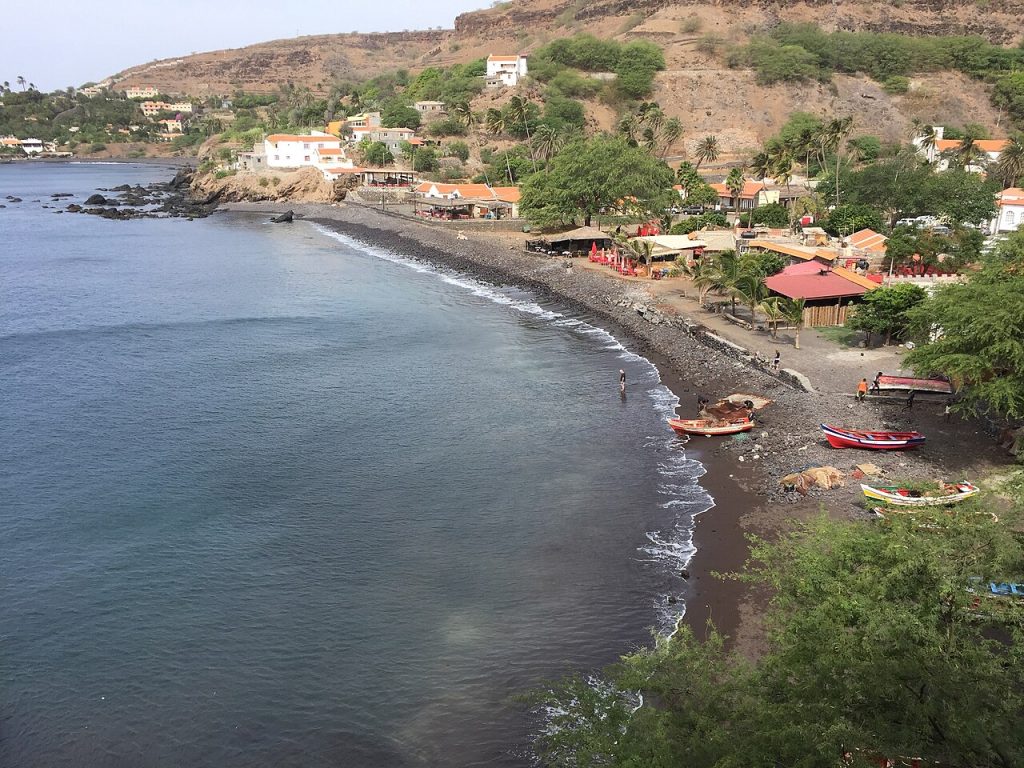
Finally, the setting is beautiful. Fishing boats rest on a dark pebble beach, while palm trees and mango orchards fill the valley behind the town.
Exploring the Historic Centre
The historic centre of Cidade Velha Cape Verde is small and easy to explore on foot. In addition, most sights lie within a short walk of the main square.
The Pelourinho
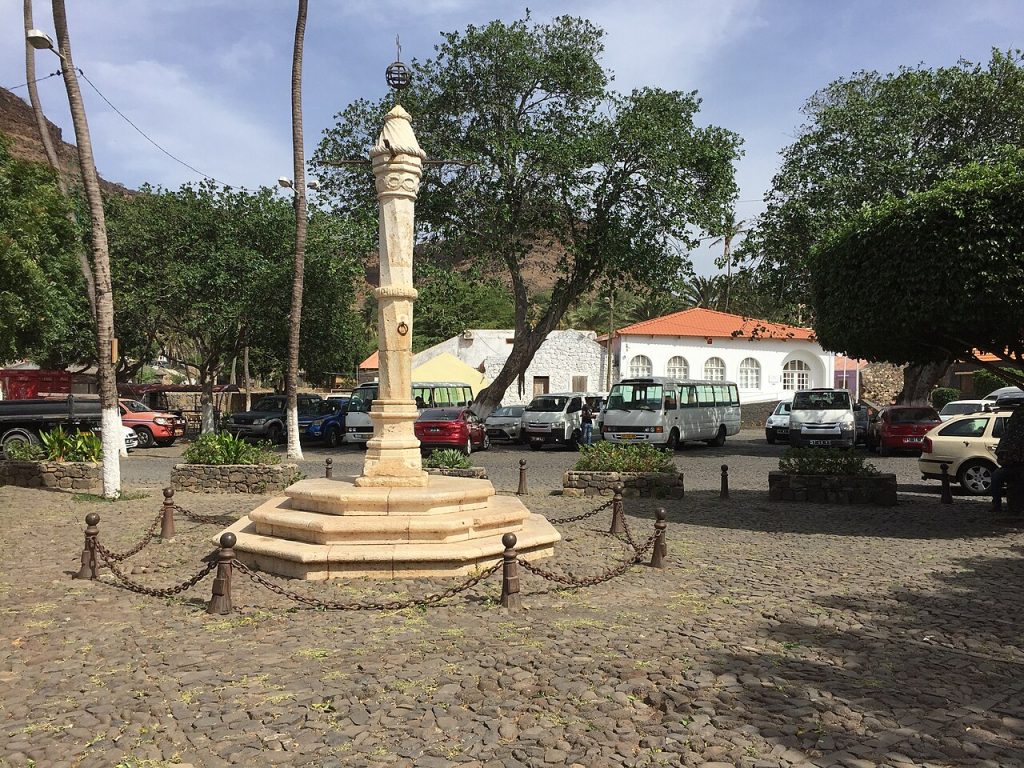
To begin with, in the main square stands the pelourinho, a marble pillory erected in the early 16th century. Sadly, officials once used it to punish enslaved people in public. Today, it is still the most powerful symbol of the town’s past.
Rua Banana
Rua Banana is believed to be one of the oldest colonial streets in Africa. Here, small stone houses with thatched roofs also line the narrow lane. When walking along it, you get a sense of what the early town looked like.
The Church of Nossa Senhora do Rosário
Built in 1495, the Church of Nossa Senhora do Rosário is one of the oldest colonial churches in the world. Inside, look especially for old tombstones set into the floor. Its simple Gothic style also reflects the very first years of Portuguese settlement.
Ruins of Faith: The Cathedral and the Convent
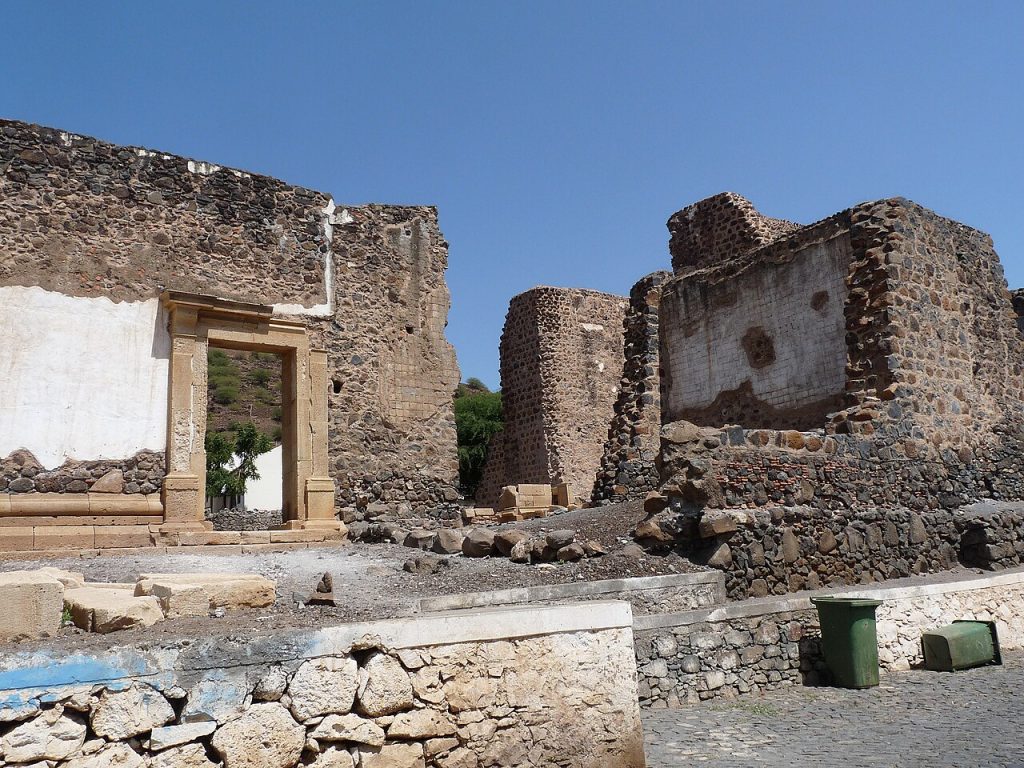
Further up, on a rise above the town, stand the ruins of the Sé Cathedral. Construction began in the 16th century, and it was once the grandest church on the islands. Today, though, only its massive stone walls remain, open to the sky.
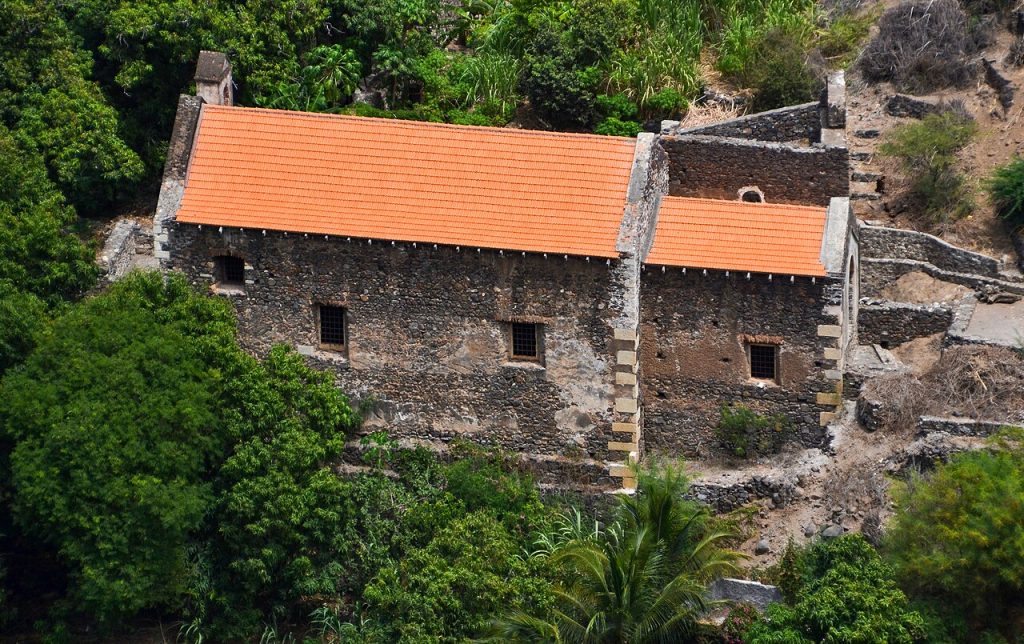
Further up the valley, the São Francisco convent dates from the 17th century. Since then, its church has been carefully restored. Meanwhile, the path to it passes gardens and fruit trees, making it a pleasant walk.
The Fort, the Sea and Village Life
Cidade Velha Cape Verde also offers wonderful views, fresh seafood and a glimpse of everyday island life.
Fort Real de São Filipe
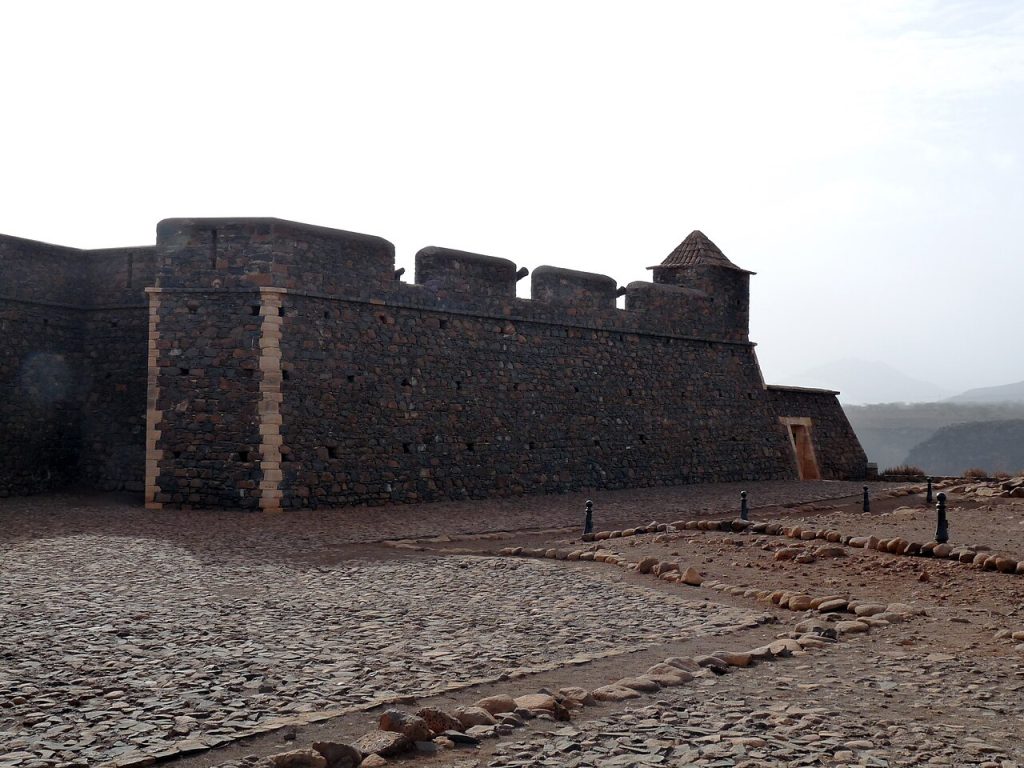
High on the cliffs above the town, the Fort Real de São Filipe was built between 1587 and 1593. Its purpose was to protect the town from pirate attacks, although it could not stop every raid.
Views Over the Atlantic
From the walls, you can see the whole town, the valley and the ocean. Above all, come in the late afternoon, when the light is soft and golden.
A Short Climb
The fort is a steep walk or a short drive from the centre. Bring water and a hat, because there is little shade.
The Beach and Fishing Boats
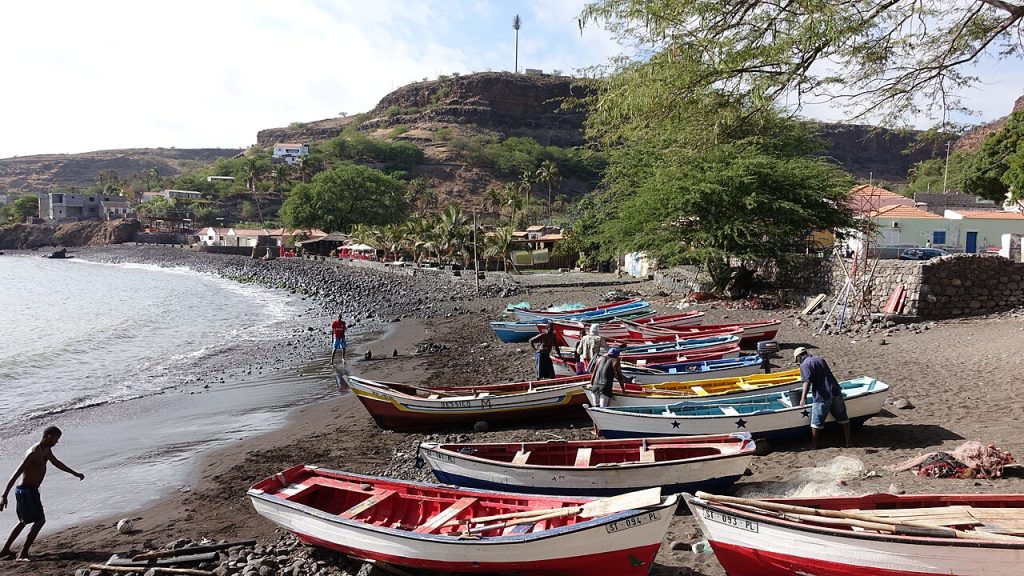
Back down on the shore, colourful wooden boats rest on the pebble beach. In the morning, fishermen bring in their catch, then small restaurants serve it grilled for lunch.
Food and Music
Overall, Cape Verdean food is simple and hearty. For example, try cachupa, a slow cooked stew of corn, beans and fish or meat. In addition, you may hear morna or funaná music drifting from a café.
One Historical Fact About Cidade Velha, Cape Verde
Christopher Columbus stopped at Ribeira Grande in 1498, during his third voyage to the Americas. In fact, Vasco da Gama had also called there the year before. These visits show how important the town was on the great sea routes of the time.
How to Get to Cidade Velha, Cape Verde
First, fly to Nelson Mandela International Airport in Praia, which has connections to Lisbon and other cities. From Praia, the drive to Cidade Velha takes about 20 minutes.
Alternatively, you can take an aluguer, a shared minibus, from Praia. It is cheap and also gives you a taste of local life. Taxis and organised tours are also easy to arrange.
Best Time to Visit Cidade Velha, Cape Verde
Cape Verde is warm all year, so you can visit Cidade Velha at any time. Generally, the dry months from November to June are the most comfortable for sightseeing.
The rainy season, from August to October, brings short bursts of rain. On the other hand, the valley turns green and lush during these months.
Is Cidade Velha, Cape Verde Worth Visiting?
Yes, absolutely. After all, Cidade Velha combines deep history, moving monuments and a relaxed island atmosphere. Moreover, it is easy to reach from Praia. So allow at least half a day, or a full day if you want to enjoy lunch by the sea.
Final Thoughts
Cidade Velha Cape Verde is a small town with a story that reaches across oceans. So walk Rua Banana, stand before the pelourinho and watch the sunset from the fort. In the end, you will leave with a deeper understanding of Cape Verde and its people.
If you are interested in the history of West Africa, you may also find our guides to Gorée Island, Senegal and Ouidah, Benin meaningful.
Image Credits
Wikimedia Commons
- Cidade Velha From Above: Photo by Los viajeros 77 via Wikimedia Commons (CC BY-SA 4.0)
- Pelourinho of Cidade Velha: Photo by Los viajeros 77 via Wikimedia Commons (CC BY-SA 4.0)
- Se Cathedral Ruins: Photo by Ji-Elle via Wikimedia Commons (CC BY-SA 3.0)
- Fort Real de Sao Filipe: Photo by Gagum via Wikimedia Commons (CC BY 2.0)
- Sao Francisco Convent: Photo by Mosbatho via Wikimedia Commons (CC BY 4.0)
- Fishing Boats in Cidade Velha: Photo by Franzfoto via Wikimedia Commons (CC BY-SA 3.0)